
How to Design a Pool Patio That Stays Cool in the Summer
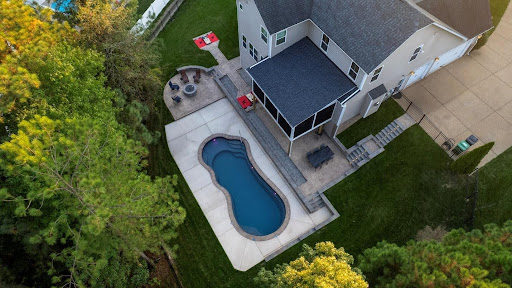
A pool patio should be the highlight of your backyard — a place where you can relax, entertain, and cool off without wincing every time your bare feet hit the deck. But for many Virginia homeowners, the patio around their pool becomes the hottest, most uncomfortable spot in the yard by mid-afternoon. The good news? With the right design choices, that doesn’t have to be the case. From the materials underfoot to the shade overhead, every decision you make shapes how your pool area feels on the hottest days of the year.
Start With the Right Pool Deck Materials
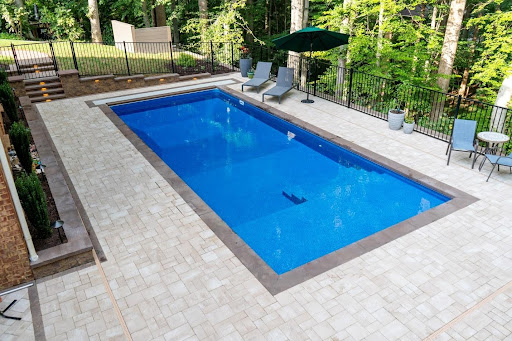
Not all patio surfaces are created equal — especially when it comes to heat retention. Some materials absorb the sun’s energy and radiate it back long after the sun has shifted, turning your pool deck into a griddle by 2 p.m.
Here’s how some of the most popular options compare:
- Concrete is affordable and versatile, but standard gray concrete can get extremely hot in direct sun. Brushed or broom-finished concrete adds texture and helps with traction, and lighter pigments or coatings can significantly reduce heat absorption.
- Pavers — whether concrete or brick — offer excellent design flexibility and tend to stay cooler than a solid concrete slab because the joints between them allow for some heat dissipation. Lighter-toned pavers in beige, cream, or sandstone shades are a popular choice for Virginia pool areas.
- Natural stone like travertine or limestone is one of the best performers in the heat. Travertine in particular stays naturally cool underfoot even in direct sunlight, which is why it’s a go-to material for pool decks in warm climates. It also has a naturally porous, non-slip texture — a bonus around water.
- Textured or cool-coat finishes applied over existing concrete can be a cost-effective way to reduce surface temperature and improve traction without a full replacement.
When planning a new pool installation or patio renovation, it’s worth comparing these options not just on upfront cost, but on how they perform through a Virginia summer — where temperatures regularly push into the 90s and humidity makes every degree count.
Choose Lighter Colors and Slip-Resistant Textures
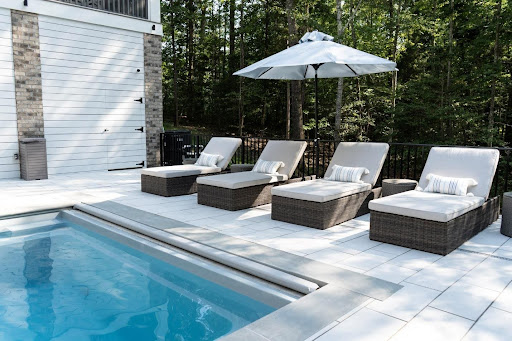
Color is one of the simplest — and most overlooked — ways to keep a pool deck comfortable. Dark surfaces like charcoal pavers or deep-toned slate absorb significantly more solar radiation than lighter alternatives. A cream-colored travertine or a light beige paver can be 20–30 degrees cooler to the touch than a dark gray surface in the same direct sunlight.
Texture is equally important, and not just for comfort. A smooth, polished surface may look sleek in photos, but wet bare feet, pool toys, and excited kids make it a slip hazard. Look for materials or finishes rated for wet environments — brushed concrete, tumbled pavers, and natural travertine all offer natural grip without sacrificing aesthetics. Think of it this way: the best-looking patio is one your family actually feels safe using every day.
Even the coolest patio surface can’t fully compensate for hours of direct sun exposure. Thoughtful shade planning is what separates a pool patio you’ll use all afternoon from one you retreat from by noon.
Some options worth considering:
- Pergolas offer a defined, architectural feel and can be dressed with shade sail fabric, climbing plants, or retractable canopies to control how much sun filters through. They work especially well to anchor a seating or dining area adjacent to the pool.
- Pavilions and covered structures provide full shade and protection from afternoon thunderstorms — which Virginia homeowners know are a regular summer reality. A well-placed pavilion can effectively extend your usable outdoor season.
- Cantilever or oversized umbrellas are a flexible, lower-cost option for shading lounge chairs or a small seating group without committing to a permanent structure.
- Strategic landscaping — like a row of ornamental trees or a privacy hedge along the west side of the patio — can naturally block late-afternoon sun while also improving privacy.
Airflow matters too. How your patio is oriented, whether it’s hemmed in by fencing or open to a breeze, and how it connects to adjacent outdoor spaces all affect how stifling or refreshing the area feels. A good designer will look at your yard’s natural airflow patterns before finalizing the layout.
Bring It All Together for a Patio Built for Summer
A pool patio that stays cool and comfortable isn’t the result of one magic material or a single design trick — it’s the result of smart decisions working together. The right surface keeps feet comfortable. The right color reflects heat instead of holding it. The right texture keeps everyone safe. And the right shade structures make the space livable from morning until evening.
At Cleanstone, we help Virginia homeowners think through all of these details — from material selection and color choices to layout, shade planning, and how your pool patio connects with the rest of your outdoor living space. Ready to start designing a pool patio that works as hard as you do all summer long? Contact us today to get the conversation started.

